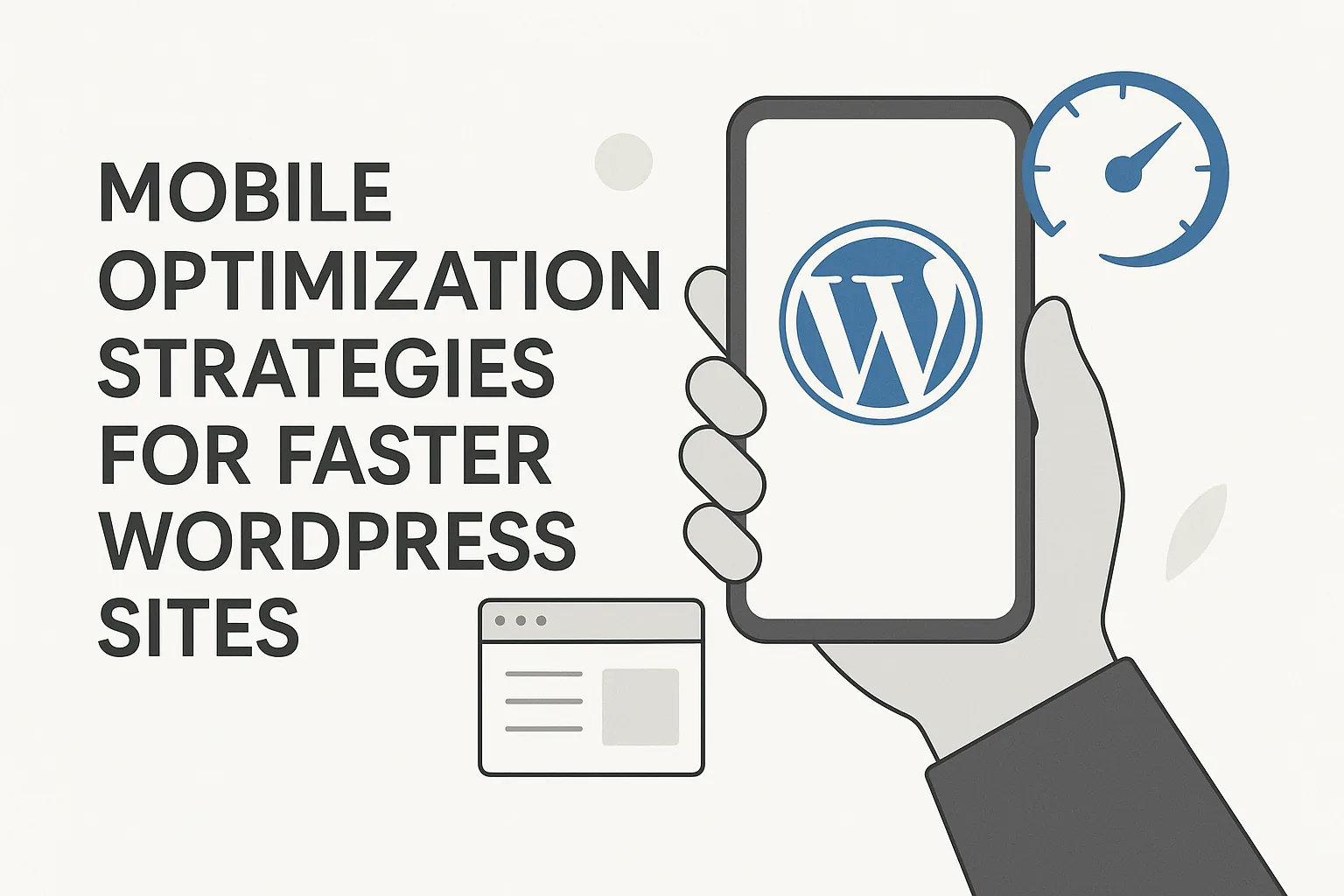
Mobile Optimization Strategies for Faster WordPress Sites
If your WordPress site feels slow on a phone, visitors will notice before they ever read your content or contact your business. mobile optimization is no longer a technical extra—it is a core part of website performance, search visibility, and conversion strategy. For businesses competing online, a faster mobile experience can reduce bounce rates, improve engagement, and help more users complete the actions that matter.
Below are practical strategies STL Website Development uses to improve WordPress speed, usability, and reliability across mobile devices.
Why mobile optimization matters for WordPress performance
Most users now browse, compare, and contact businesses from mobile devices. That means your WordPress site has to load quickly on smaller screens, slower networks, and a wide range of devices.
A desktop site that performs well is not automatically a fast mobile site. Mobile users often deal with:
- Slower cellular connections
- Limited processing power
- Smaller screens
- Touch-based navigation
- Interruptions and shorter attention spans
Google also evaluates page experience through performance signals like Core Web Vitals. You can review Google’s guidance on Core Web Vitals to understand how loading speed, responsiveness, and visual stability affect the user experience.
For WordPress sites, mobile optimization is especially important because themes, plugins, images, page builders, ads, tracking scripts, and hosting choices can all add unnecessary weight. The goal is not just to make a site “fit” on a phone. The goal is to make the site fast, clear, and easy to use.
Start with a mobile performance audit
Before changing plugins or redesigning pages, start with data. A performance audit shows where the site is slow and which fixes will create the biggest impact.
Useful tools include:
- Google PageSpeed Insights
- Chrome Lighthouse
- GTmetrix
- WebPageTest
- Google Search Console Core Web Vitals reports
When reviewing results, pay attention to:
- Largest Contentful Paint, or LCP: How quickly the main content loads
- Interaction to Next Paint, or INP: How responsive the site feels when users interact
- Cumulative Layout Shift, or CLS: Whether elements move unexpectedly during loading
- Total page weight: The combined size of images, scripts, fonts, and other assets
- Server response time: How quickly the hosting environment responds
A proper audit should test key pages, not just the homepage. Service pages, landing pages, blog articles, product pages, and contact forms may all perform differently.
If your website has structural issues beyond speed, STL Website Development can help through professional custom website development services that focus on performance, usability, and long-term scalability.
Choose fast, reliable WordPress hosting
Hosting is one of the most important foundations for mobile optimization. Even a well-built site can feel slow if the server response time is poor.
Look for hosting that provides:
- Fast server hardware
- Solid uptime
- Built-in caching
- PHP 8+ support
- HTTP/2 or HTTP/3
- A content delivery network option
- Automatic backups
- Strong security configuration
- WordPress-specific support
Cheap shared hosting may work for very small websites, but it can become a performance bottleneck as traffic, plugins, and content increase. A slow server delays the first response, which makes every other optimization less effective.
For local businesses, service companies, and growing brands, managed WordPress hosting is often worth the investment. It reduces technical risk and provides a better foundation for fast mobile performance.
Use a lightweight WordPress theme
Many WordPress themes look impressive in demos but are loaded with features you may never use. Sliders, animation libraries, icon packs, visual effects, and bundled page builders can add unnecessary code.
A mobile-friendly WordPress theme should be:
- Lightweight
- Responsive
- Actively maintained
- Compatible with modern PHP
- Accessible
- Built with clean code
- Easy to customize without excessive plugins
Avoid choosing a theme based only on appearance. A strong design can be created on a fast framework. In many cases, a custom or semi-custom theme gives businesses better control over performance, layout, and branding.
Your visual identity also affects mobile experience. A clean, recognizable logo can improve credibility without slowing down the interface. STL Website Development provides professional logo design services that support clear branding across desktop and mobile layouts.
Optimize images for faster mobile loading
Images are often the largest files on a WordPress site. If they are not optimized, they can slow down mobile pages significantly.
Use these image optimization practices:
Resize images before uploading
Do not upload a 4,000-pixel-wide image if it will display at 800 pixels.Compress images
Use tools or plugins that reduce file size while preserving quality.Use modern formats
WebP and AVIF can reduce image weight compared with older formats like JPEG and PNG.Enable lazy loading
Load images only when they are close to entering the user’s screen.Set image dimensions
Width and height attributes help prevent layout shifts.Avoid image-heavy hero sections
Large hero images can delay the first meaningful content on mobile screens.
WordPress now includes native lazy loading, but additional configuration may still be needed. An image optimization plugin can help, but the best results come from combining plugin automation with smart design choices.
H2: mobile optimization for CSS, JavaScript, and code delivery
Code weight has a major impact on mobile performance. Every CSS file, JavaScript file, tracking script, and third-party embed can delay rendering or block interaction.
Effective mobile optimization often includes:
- Minifying CSS and JavaScript
- Removing unused CSS
- Deferring non-critical JavaScript
- Delaying third-party scripts
- Combining files only when appropriate
- Loading critical CSS first
- Avoiding excessive animation libraries
- Removing unnecessary plugin assets from pages that do not need them
Not every file should be combined or deferred automatically. Some scripts are required for forms, navigation, e-commerce, analytics, or accessibility features. Poor optimization can break functionality.
That is why performance work should be tested carefully after each change. A faster site is only valuable if it still works correctly.
Reduce plugin bloat
Plugins are one of WordPress’s biggest strengths, but they can also become a major source of performance problems. Many websites accumulate plugins over time for features that are no longer needed.
Audit your plugins and ask:
- Is this plugin still necessary?
- Does another plugin already provide this feature?
- Is it actively updated?
- Does it load scripts on every page?
- Is there a lighter alternative?
- Can the feature be handled with custom code?
Common plugin issues include duplicate functionality, outdated code, database bloat, and excessive front-end assets. For example, a plugin used for one small design feature may load large files across the entire site.
A regular plugin review should be part of ongoing WordPress website maintenance. Maintenance is not just about updates—it is also about keeping the site secure, fast, and efficient.
Use caching correctly
Caching stores versions of your pages and assets so they can be served faster to visitors. For WordPress, caching can dramatically improve mobile load times.
Common caching types include:
- Page caching: Stores static versions of dynamic WordPress pages
- Browser caching: Tells browsers to reuse files instead of downloading them again
- Object caching: Stores database query results
- Opcode caching: Improves PHP performance on the server
- CDN caching: Serves content from locations closer to users
A quality caching setup can reduce server workload and improve first-load speed. However, caching should be configured carefully for sites with logged-in users, e-commerce carts, membership areas, or personalized content.
Caching plugins can help, but your host, theme, CDN, and plugins all affect how caching should be configured. The best setup depends on your site’s structure.
Add a content delivery network
A content delivery network, or CDN, stores copies of site files across distributed servers. When someone visits your site, the CDN can serve images, CSS, JavaScript, and other assets from a location closer to that visitor.
A CDN can help with:
- Faster asset delivery
- Reduced server load
- Better global performance
- Improved reliability during traffic spikes
- Additional security features
For businesses serving customers across multiple states or regions, a CDN is especially valuable. Even local businesses can benefit because users may access the site through different networks, devices, and connection speeds.
H3: mobile optimization for navigation and user experience
Speed is not only about file size and server response. A mobile site also has to be easy to use. If visitors cannot find what they need quickly, they may leave even if the page loads fast.
Strong mobile navigation should include:
- A simple menu structure
- Clear service categories
- Tap-friendly buttons
- Visible contact options
- Short forms
- Readable font sizes
- Proper spacing between links
- No intrusive popups
- Clear calls to action
Mobile users often want immediate answers. They may be looking for your phone number, service details, pricing guidance, location, reviews, or a contact form. Place key information where it is easy to find.
Content should also be written for quick scanning. Short paragraphs, descriptive headings, bullet points, and direct calls to action improve mobile usability. If your site needs stronger messaging, STL Website Development offers website copywriting services that help turn traffic into leads.
Improve font loading
Web fonts can improve branding, but they can also slow down mobile pages if not managed correctly.
To optimize fonts:
- Use only the font families and weights you need
- Prefer system fonts when appropriate
- Host fonts locally when beneficial
- Preload important font files
- Use modern font formats
- Avoid loading multiple icon font libraries
- Set font-display behavior to reduce invisible text delays
A clean typography system is often faster and more readable than a design using too many font styles. On mobile devices, readability should always come before decoration.
Limit third-party scripts
Third-party scripts are common on WordPress sites. Examples include analytics, chat widgets, tracking pixels, review embeds, social feeds, advertising scripts, heatmaps, scheduling tools, and video embeds.
Each script can add load time, block rendering, or affect responsiveness. Some scripts continue running after the page appears loaded, making the site feel sluggish when users tap or scroll.
Review each third-party tool and determine whether it supports a business goal. If it does not, remove it. If it does, consider delaying it until after the main content loads.
For example:
- Load chat after a delay
- Use static image previews for videos
- Replace social feeds with simple links
- Limit tracking tags to what is actually used
- Avoid multiple analytics platforms unless necessary
Good mobile optimization balances marketing needs with user experience.
Clean and optimize the WordPress database
Over time, WordPress databases collect extra data. This may include post revisions, trashed posts, expired transients, spam comments, unused plugin tables, and old settings from removed plugins.
A bloated database can slow down admin performance and, in some cases, front-end page generation.
Database cleanup may include:
- Removing unnecessary revisions
- Deleting spam and trash
- Cleaning expired transients
- Optimizing database tables
- Removing unused plugin tables
- Reviewing autoloaded options
Database work should be handled carefully and backed up first. Deleting the wrong data can cause site issues. This is one reason performance optimization is often best handled as part of a professional maintenance plan.
Consider a wordpress migration when the platform is holding you back
Sometimes a site is slow because it was built on an outdated theme, poor hosting, an overloaded page builder, or years of unmanaged plugin additions. In those cases, small fixes may not be enough.
A strategic wordpress migration can move your site to a stronger environment, cleaner build, or improved architecture. This may include moving to better hosting, rebuilding templates, restructuring content, replacing bloated plugins, or improving the database.
A migration should be planned carefully to protect:
- SEO rankings
- URLs and redirects
- Media files
- Form functionality
- Analytics
- Security settings
- Backups
- User experience
When handled properly, a wordpress migration can be a smart opportunity to improve speed, security, design, and maintainability at the same time.
Test on real mobile devices
Performance tools are useful, but real-device testing is essential. A site may score well in a lab report but still feel awkward on an actual phone.
Test your WordPress site on:
- iPhones and Android devices
- Multiple screen sizes
- Cellular and Wi-Fi connections
- Different browsers
- Landscape and portrait orientations
Check key actions:
- Opening the menu
- Tapping buttons
- Submitting forms
- Calling from click-to-call links
- Viewing images
- Reading service pages
- Completing checkout if applicable
Look for delays, layout issues, overlapping elements, hard-to-tap links, and content that feels cramped. Practical testing often reveals issues automated tools miss.
Monitor performance after launch
Mobile performance is not a one-time project. WordPress sites change as plugins update, content grows, tracking tools are added, and design changes are made.
Ongoing monitoring should include:
- Core Web Vitals checks
- Uptime monitoring
- Plugin and theme updates
- Security scans
- Backup verification
- Broken link checks
- Form testing
- Image optimization reviews
- Database cleanup
- Conversion tracking reviews
A fast site today can become slow six months from now without maintenance. Businesses that rely on leads, sales, or online visibility should treat mobile optimization as an ongoing part of website management.
FAQ
What is mobile optimization for a WordPress site?
mobile optimization is the process of improving how a WordPress site loads, displays, and functions on mobile devices. It includes speed improvements, responsive design, image compression, code optimization, navigation improvements, and usability testing.
How fast should a mobile WordPress site load?
Ideally, important content should begin loading within the first couple of seconds. Performance goals vary by site, but faster is almost always better. Focus on improving Core Web Vitals, reducing page weight, and making key actions easy for mobile users.
Do plugins hurt mobile optimization?
Plugins can help or hurt performance depending on how they are built and configured. Too many plugins, outdated plugins, or plugins that load heavy scripts on every page can slow down mobile performance. A plugin audit is an important part of optimization.
Is mobile optimization important for SEO?
Yes. Google uses mobile-first indexing, meaning it primarily evaluates the mobile version of your site for indexing and ranking. A fast, usable mobile experience can support better engagement, stronger search performance, and improved conversions.
Can STL Website Development speed up an existing WordPress site?
Yes. STL Website Development can audit your current WordPress site, identify performance issues, improve mobile speed, reduce plugin bloat, optimize content and images, and recommend long-term maintenance strategies.
Build a faster mobile WordPress site with STL Website Development
A fast WordPress site is built through smart decisions: reliable hosting, clean code, optimized images, careful plugin management, caching, strong content structure, and ongoing maintenance. The best results come from treating mobile optimization as part of the entire website strategy—not as a quick technical patch.
If your WordPress site is slow, difficult to use on a phone, or not converting mobile visitors into leads, STL Website Development can help. Contact STL Website Development today to discuss a faster, cleaner, and more effective WordPress website built for modern users.