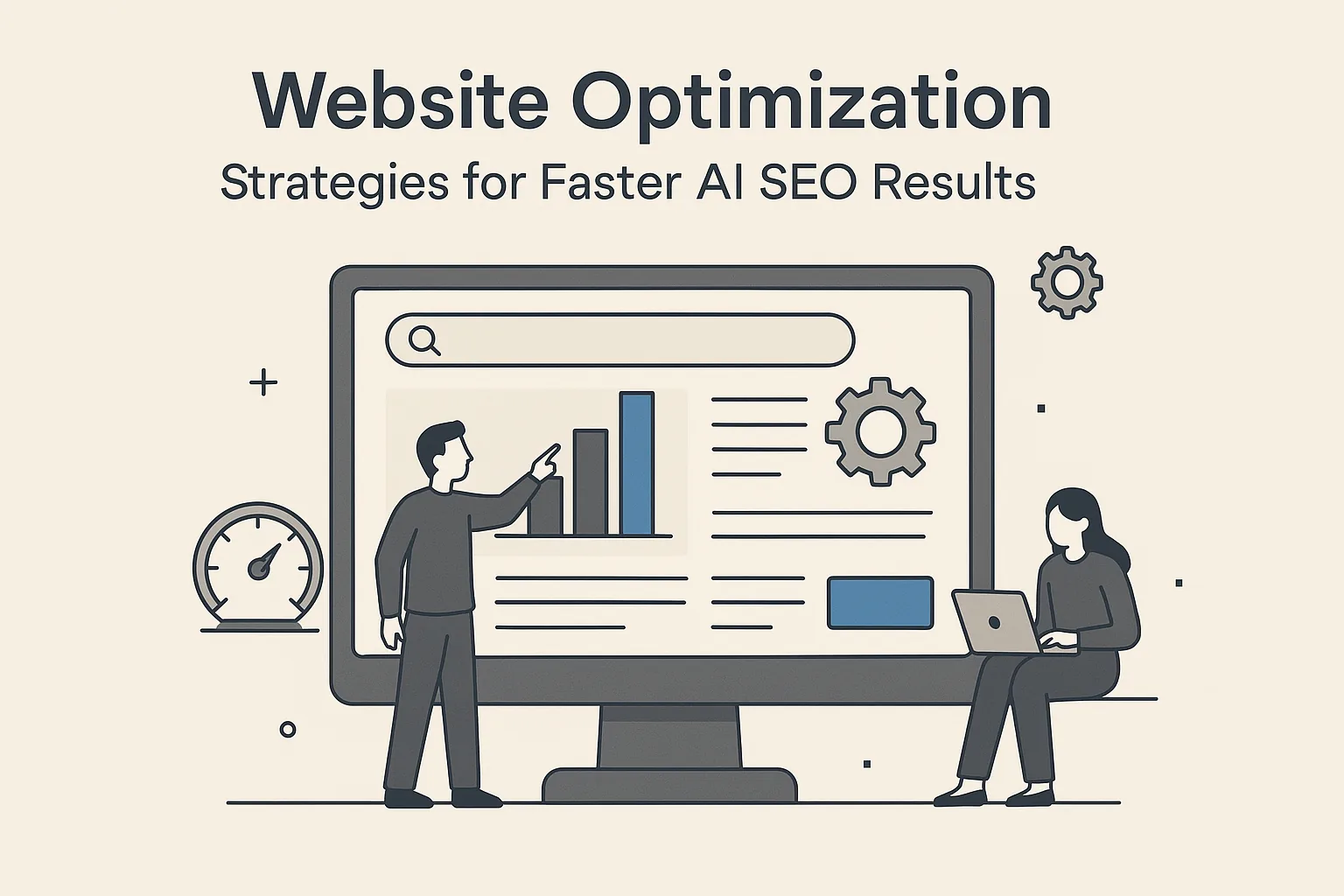
Website Optimization Strategies for Faster AI SEO Results
If your site is not technically strong, AI-powered search tools have less to work with. That is why website optimization is now one of the fastest ways to improve visibility in traditional search results, AI Overviews, answer engines, and discovery platforms. For businesses competing online, better performance, clearer structure, stronger content, and consistent maintenance can help search systems understand, trust, and recommend your website faster.
AI SEO is not a shortcut. It rewards websites that are useful, accessible, fast, and easy to interpret. The strategies below explain how to optimize your website so search engines and AI systems can crawl, process, and present your content with confidence.
Why website optimization matters for AI SEO
Search engines have always used technical signals, content quality, and user experience to rank pages. AI SEO raises the standard because modern search systems do more than match keywords. They summarize, compare, extract entities, evaluate intent, and generate answers based on trusted sources.
That means your website must be easy for both people and machines to understand.
Strong website optimization helps with:
- Faster crawling and indexing
- Better page speed and Core Web Vitals
- Clearer content structure
- Stronger topical relevance
- Improved accessibility
- Higher user engagement
- Better conversion paths
- More accurate AI-generated summaries
Google’s own documentation emphasizes creating helpful, reliable, people-first content. You can review those principles in the Google Search Central guide to helpful content. When your site is optimized around clarity, speed, and usefulness, it becomes easier for search engines and AI tools to identify your business as a relevant result.
Start with a technical website optimization audit
Before changing content or adding new pages, review the technical foundation of your site. Technical issues can slow SEO progress because they interfere with crawling, rendering, indexing, and user experience.
A practical audit should include:
- Page speed and mobile performance
- Core Web Vitals
- Crawl errors
- Broken links
- Redirect chains
- Duplicate content
- Missing or weak metadata
- XML sitemap accuracy
- Robots.txt configuration
- Indexing status
- Schema markup
- Image size and formatting
- Hosting and server response time
Use tools such as Google PageSpeed Insights and Google Search Console to identify performance and indexing issues. These tools help reveal where your site may be creating friction for users and search systems.
If your website has outdated code, poor mobile layouts, or slow templates, it may be time to improve the build itself. STL Website Development offers professional website development services designed to create fast, scalable, search-ready websites.
Improve site speed and Core Web Vitals
Speed is one of the most important elements of website optimization because it affects users, conversions, and search performance. AI SEO results depend on pages that can be accessed, rendered, and evaluated efficiently.
Core Web Vitals measure real-world page experience, including:
- Largest Contentful Paint (LCP): How quickly the main page content loads
- Interaction to Next Paint (INP): How responsive the page feels when users interact
- Cumulative Layout Shift (CLS): How visually stable the page is while loading
To improve speed, focus on:
Compressing images
Use modern formats such as WebP when appropriate. Resize images to the actual display dimensions instead of uploading oversized files.Reducing unnecessary scripts
Too many plugins, tracking scripts, sliders, and third-party embeds can slow a site dramatically.Using browser caching
Caching allows returning visitors to load pages faster by storing common assets locally.Improving hosting quality
Low-quality hosting can create slow server response times even if the website is otherwise optimized.Minimizing CSS and JavaScript
Clean, efficient code helps browsers render pages faster.Using a content delivery network
A CDN can serve files from locations closer to the visitor, reducing load time.
Fast websites are not just better for SEO. They create a better experience for prospects, which can lead to more calls, quote requests, purchases, and form submissions.
Build a clear content structure for AI SEO
AI search systems rely heavily on structure. They look for headings, entities, context, relationships, and concise answers. A page with clear organization is easier to parse than a wall of generic text.
Effective content structure includes:
- One clear H1 per page
- Logical H2 and H3 subheadings
- Short paragraphs
- Descriptive bullet lists
- Internal links to related services or resources
- Direct answers to common questions
- Consistent terminology
- Topic-focused sections
For example, if you offer a local service, your page should clearly explain who you serve, what you do, where you work, what problems you solve, and what the next step is. AI SEO performs best when your content removes ambiguity.
Strong content also needs persuasive messaging. If your pages are technically sound but unclear, visitors may leave without taking action. Professional website copywriting services can help turn optimized pages into stronger sales assets.
Use website optimization to strengthen topical authority
Topical authority means your website demonstrates depth and expertise around the services, products, and problems your audience cares about. Instead of publishing random blog posts, build a connected content ecosystem.
A strong topical strategy may include:
- Core service pages
- Supporting blog articles
- FAQ content
- Case studies
- Location pages
- Comparison guides
- Educational resources
- Process pages
For example, a contractor may need pages covering services, project types, materials, pricing factors, maintenance tips, and service areas. A professional services firm may need content around problems solved, industries served, process, qualifications, and client outcomes.
Internal linking is essential here. When you connect related pages with descriptive anchor text, you help users and search engines understand how your content fits together.
Good internal links are specific. Instead of using “click here,” use anchors like:
- “custom website development”
- “ongoing website maintenance”
- “professional logo design”
- “SEO-focused website copywriting”
This creates stronger context and improves navigation across the site.
Optimize metadata for clicks and context
Title tags and meta descriptions still matter. They help search engines understand the page and can influence whether users click your result.
A strong title tag should:
- Include the primary topic naturally
- Stay concise
- Match the page intent
- Avoid keyword stuffing
- Include the business name when useful
A strong meta description should:
- Summarize the page clearly
- Highlight a benefit
- Include a call to action
- Reflect the actual page content
For AI SEO, metadata is only one signal, but it supports clarity. Search systems compare metadata, headings, body content, internal links, and user experience signals to understand what a page is really about.
If those elements are aligned, your site is easier to interpret. If they conflict, optimization becomes weaker.
Add schema markup for better machine understanding
Schema markup is structured data that helps search engines understand specific information on your site. It does not guarantee rich results, but it can improve how clearly your content is interpreted.
Common schema types include:
- Organization
- LocalBusiness
- Service
- Product
- FAQPage
- Article
- Review
- BreadcrumbList
For local businesses, structured data can reinforce your business name, address, phone number, service area, hours, and offerings. For articles, schema can clarify the author, publish date, headline, and topic.
You can learn more from the official Schema.org structured data vocabulary and Google’s structured data documentation.
Schema should be accurate and consistent. Do not mark up content that is not visible on the page, and do not use misleading data. The goal is to make your site easier to understand, not to manipulate search engines.
Improve image and media optimization
Images often create some of the biggest performance problems on business websites. They also influence accessibility, user experience, and content relevance.
Image optimization should include:
- Descriptive file names
- Compressed file sizes
- Proper dimensions
- Relevant alt text
- Lazy loading
- Modern formats when appropriate
- Consistent visual style
Alt text should describe the image for users who rely on screen readers and for systems that interpret page content. It should not be stuffed with keywords. A good alt attribute is accurate, concise, and useful.
Visual consistency also matters for trust. If your site uses outdated graphics, inconsistent colors, or low-quality branding, visitors may question your professionalism. STL Website Development provides professional logo design for businesses that need a stronger visual identity to support their website and marketing.
Create content that answers real search intent
AI SEO depends on matching intent. Search systems are getting better at identifying whether a page truly answers a question or simply repeats keywords.
Before creating or updating a page, identify the intent behind the search:
- Is the user looking for information?
- Are they comparing options?
- Do they need pricing guidance?
- Are they ready to contact a provider?
- Are they trying to solve a specific problem?
- Do they need local service details?
Then build the page around that intent.
Strong content should answer:
- What is the service or topic?
- Who needs it?
- Why does it matter?
- What problems does it solve?
- What is the process?
- What should the user do next?
- Why should they trust your business?
Avoid vague claims such as “we are the best” unless you support them with proof. Use specifics, examples, credentials, service details, guarantees, testimonials, project descriptions, or measurable outcomes where available.
This kind of website optimization improves both rankings and conversions because it gives users the information they need to make a decision.
H3: website optimization for better internal linking
Internal links help distribute authority, guide visitors, and create a clearer site architecture. They are also important for AI SEO because they show relationships between topics.
A strong internal linking strategy includes:
- Links from blog posts to service pages
- Links between related service pages
- Links from high-traffic pages to high-value conversion pages
- Breadcrumb navigation
- Contextual links inside body content
- Footer or menu links where appropriate
For example, if a blog article explains technical performance improvements, it can naturally point readers to professional website development or ongoing maintenance. If an article explains branding, it can link to logo design. If a service page needs stronger messaging, it can link to copywriting support.
The key is relevance. Every internal link should help the reader take a logical next step.
Keep your website maintained and updated
Optimization is not a one-time project. Websites need ongoing updates to stay secure, fast, compatible, and relevant. Outdated plugins, broken forms, expired content, and neglected security can hurt both users and search performance.
Regular maintenance should include:
- Software and plugin updates
- Security monitoring
- Backups
- Broken link checks
- Speed testing
- Form testing
- Content updates
- Analytics review
- Search Console monitoring
- Database cleanup
- Accessibility checks
AI SEO evolves quickly. Search behavior changes, competitors publish new content, and algorithms continue improving. A site that is not maintained will gradually lose ground.
STL Website Development provides website maintenance services to help businesses keep their websites secure, updated, and performing properly.
Align optimization with conversion goals
Traffic alone is not the goal. Your website should convert visitors into leads, customers, subscribers, or booked appointments.
Conversion-focused website optimization includes:
- Clear calls to action
- Prominent contact information
- Simple forms
- Trust signals
- Testimonials or reviews
- Strong service descriptions
- Easy navigation
- Mobile-friendly layouts
- Fast-loading landing pages
- Clear next steps
Every important page should answer this question: “What should the visitor do next?”
That may be calling your business, requesting a quote, scheduling a consultation, downloading a guide, or visiting a service page. If the next step is unclear, users may leave even if the page ranks well.
AI SEO can help bring more qualified visitors to your site, but conversion strategy turns that visibility into measurable business results.
Measure performance and refine over time
Optimization decisions should be based on data. Use analytics and search tools to monitor how your website is performing.
Important metrics include:
- Organic traffic
- Keyword visibility
- Indexed pages
- Click-through rates
- Engagement time
- Conversions
- Form submissions
- Phone clicks
- Page speed scores
- Crawl errors
- Top landing pages
- Exit pages
Do not judge SEO performance from one metric alone. A page may receive fewer visits but generate higher-quality leads. Another page may rank well but fail to convert. Review the full picture before making changes.
Regular reporting helps identify which pages need updates, which topics deserve expansion, and which technical issues are slowing progress.
Common website optimization mistakes to avoid
Many businesses slow their AI SEO results by making avoidable mistakes. Watch for these common issues:
- Publishing thin content with little original value
- Ignoring page speed
- Using duplicate title tags
- Overloading pages with plugins
- Neglecting mobile users
- Forgetting internal links
- Using unclear calls to action
- Failing to update old content
- Adding keywords unnaturally
- Skipping schema markup
- Not monitoring Search Console
- Treating SEO as a one-time task
The best approach is consistent improvement. Small, strategic updates can compound over time and create stronger visibility, better user experience, and more conversions.
FAQ
What is website optimization for AI SEO?
Website optimization for AI SEO is the process of improving your site’s speed, structure, content, technical performance, and user experience so search engines and AI systems can better understand and recommend your pages.
How fast can optimization improve SEO results?
Some technical improvements, such as speed fixes or indexing corrections, can help quickly. Content and authority improvements usually take longer. Results depend on competition, site history, technical condition, and the quality of your updates.
Is AI SEO different from traditional SEO?
AI SEO builds on traditional SEO but places more emphasis on clarity, entities, structured content, helpful answers, and trust signals. A strong technical foundation and useful content still matter.
How often should a website be optimized?
Your site should be reviewed regularly. Technical maintenance may be monthly, while content and SEO reviews may happen quarterly or more often in competitive industries.
Do small businesses need schema markup?
Yes, many small businesses can benefit from schema markup, especially LocalBusiness, Service, FAQPage, and Review schema when appropriate. It helps search systems interpret important business details more accurately.
Get faster AI SEO results with stronger website optimization
AI-powered search rewards websites that are fast, clear, helpful, and technically sound. If your site is slow, outdated, confusing, or poorly structured, your SEO results will likely take longer and cost more to achieve. With the right website optimization strategy, your business can improve visibility, create a better user experience, and turn more visitors into leads.
STL Website Development helps businesses build, optimize, maintain, and improve websites that support real growth. If you want faster AI SEO results from a stronger website foundation, contact STL Website Development today to discuss your next step.