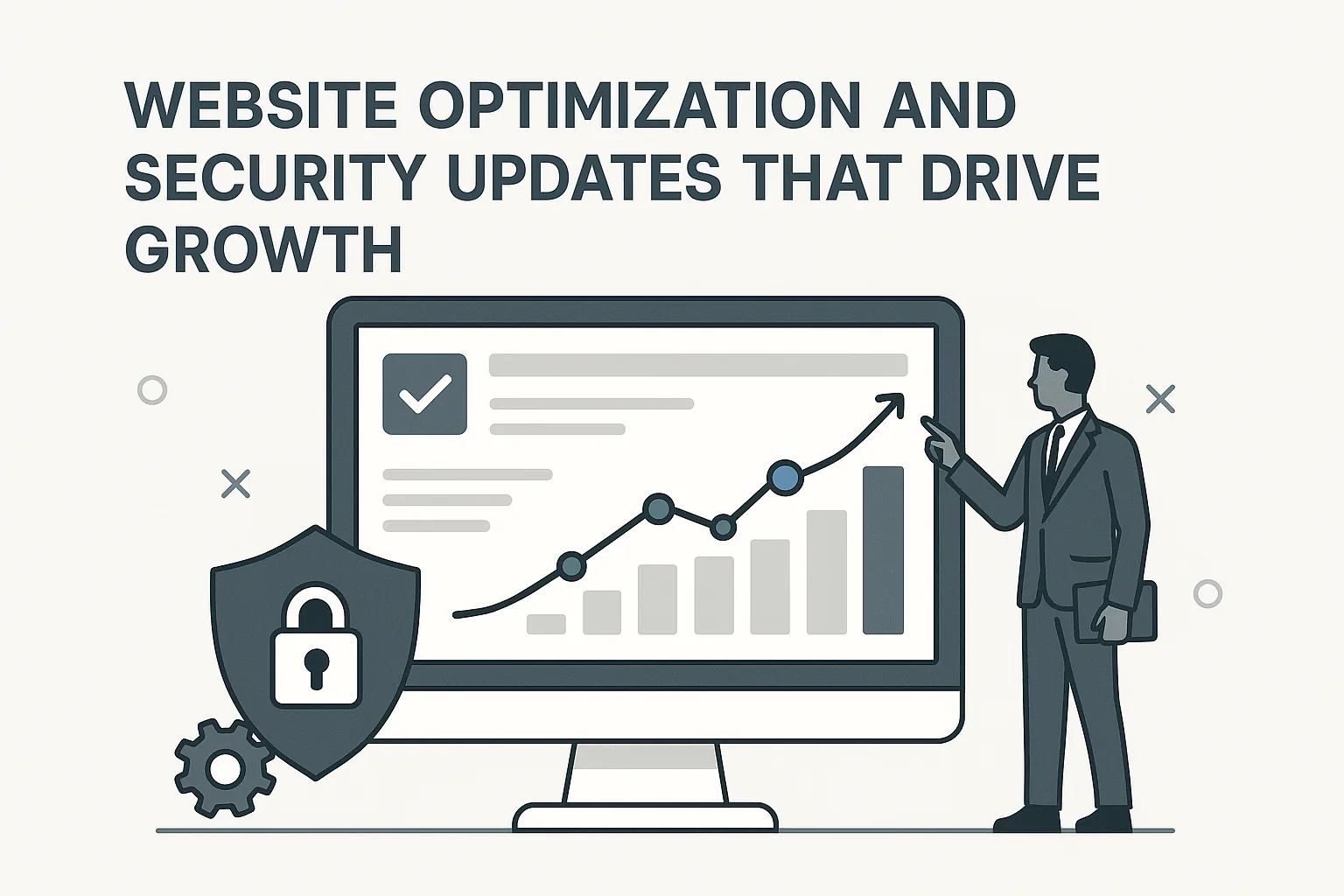
Website Optimization and Security Updates That Drive Growth
A fast, stable, secure website is no longer a “nice to have.” It directly affects visibility, trust, leads, and revenue. For businesses competing online, website optimization and timely security updates work together to create a better user experience while reducing the risk of downtime, data loss, and lost opportunities.
At STL Website Development, we look at performance and security as growth tools—not just technical tasks. When your website loads quickly, functions correctly, protects users, and supports conversions, it becomes a stronger asset for your business.
Why Website Optimization Matters for Business Growth
Website optimization is the process of improving a site’s speed, usability, search performance, conversion paths, and technical foundation. It is not a one-time checklist. It is an ongoing strategy that helps your website perform better for both users and search engines.
A well-optimized website can help your business:
- Improve search engine visibility
- Reduce bounce rates
- Increase form submissions and phone calls
- Build trust with visitors
- Support paid ad performance
- Strengthen mobile user experience
- Make future updates easier and more cost-effective
Visitors make fast decisions. If your site loads slowly, feels outdated, or creates friction, users may leave before they ever read your offer. Search engines also evaluate performance, mobile experience, accessibility, structure, and security signals when determining how useful a website is.
Google’s documentation on Core Web Vitals explains how loading speed, interactivity, and visual stability contribute to user experience. These technical factors may seem small individually, but together they influence how visitors engage with your site.
The Connection Between Performance, Security, and Revenue
Many businesses treat performance and security as separate issues. In reality, they are closely connected.
A slow website can hurt conversions. An insecure website can damage trust. A poorly maintained website can do both.
For example, outdated plugins, themes, or CMS versions can create vulnerabilities. Those same outdated components may also slow down your site, conflict with newer technology, or cause layout issues. Over time, neglect creates both security risk and performance drag.
Security updates help protect your website from known threats. Website optimization helps ensure the site remains fast, clear, and easy to use. Together, they create a stronger foundation for growth.
A secure, optimized site supports:
- Better user confidence
- More reliable lead generation
- Fewer emergency fixes
- Improved search engine performance
- Longer site lifespan
- Stronger return on marketing spend
If your website is central to your sales process, maintenance and optimization should be part of your growth plan—not an afterthought.
Core Areas of Website Optimization
Effective website optimization looks at the full website experience, not just one score from one tool. Page speed matters, but so do design, content, mobile usability, technical structure, and conversion strategy.
1. Page Speed and Load Time
Users expect websites to load quickly. Slow websites create frustration, especially on mobile devices or slower connections. Even a few extra seconds can reduce engagement and conversions.
Common causes of slow load times include:
- Oversized images
- Bloated themes or plugins
- Unused scripts
- Poor hosting environments
- Too many third-party tracking tools
- Render-blocking CSS or JavaScript
- Lack of caching or compression
Tools like Google PageSpeed Insights can help identify speed issues. However, performance scores should be interpreted in context. The goal is not simply to chase a perfect number. The goal is to create a fast, reliable experience that supports business outcomes.
2. Mobile Experience
Mobile traffic is a major part of most websites. If your site is difficult to navigate on a phone, your business may be losing leads.
Mobile website optimization includes:
- Responsive layouts
- Easy-to-tap buttons
- Readable font sizes
- Fast mobile load times
- Clear navigation
- Simple forms
- Proper spacing between elements
A mobile visitor should be able to understand what you do, why it matters, and how to contact you without pinching, zooming, or hunting through cluttered menus.
3. Conversion Path Improvements
Traffic only matters if visitors take meaningful action. Conversion-focused website optimization reviews the steps users take before contacting your business, requesting a quote, scheduling a consultation, or making a purchase.
Important conversion elements include:
- Clear calls to action
- Strong headlines
- Trust signals
- Service-specific landing pages
- Contact forms that are easy to complete
- Click-to-call phone numbers
- Testimonials or case studies
- Simple navigation to priority pages
If your site has traffic but few leads, the problem may not be visibility. It may be the conversion path.
4. Technical SEO Foundation
Technical SEO helps search engines crawl, understand, and index your website. While content is critical, technical issues can prevent strong content from performing well.
A technical review may include:
- Indexing and crawlability
- XML sitemap accuracy
- Robots.txt configuration
- Schema markup
- URL structure
- Redirect management
- Duplicate content issues
- Broken links
- Canonical tags
- Metadata and heading structure
Strong website optimization gives your content a better chance to rank, especially when paired with relevant service pages and consistent updates.
5. Content Quality and Relevance
Optimized websites need strong content. Visitors need to quickly understand who you serve, what you offer, and why they should choose you.
Clear content should answer:
- What problem do you solve?
- Who do you help?
- What makes your business different?
- What should the visitor do next?
- What proof supports your claims?
If your website content is outdated, vague, or too thin, it may limit both search visibility and conversion rates. Professionally written web content can make a measurable difference. STL Website Development offers conversion-focused copywriting services to help businesses communicate clearly and persuade effectively.
Website Optimization and Security Updates: Why They Belong Together
How Website Optimization Supports a Safer Website
Website optimization often uncovers technical problems that can create security concerns. During performance reviews, developers may find outdated scripts, abandoned plugins, poor hosting settings, or unnecessary third-party tools.
Removing unnecessary components reduces both load time and risk. Every plugin, integration, or script adds complexity. If it is not actively used or maintained, it may become a liability.
Optimization can improve security by:
- Reducing plugin dependency
- Removing unused code
- Updating outdated components
- Improving hosting configurations
- Cleaning up broken or suspicious files
- Strengthening site architecture
- Limiting unnecessary access points
A leaner website is often a safer website.
Why Security Updates Are Essential
Security updates patch known vulnerabilities in software. If your site runs on a content management system like WordPress, updates may apply to the core system, themes, plugins, integrations, and server environment.
Cybersecurity agencies such as CISA regularly warn businesses about exploited vulnerabilities and the importance of timely patching. Attackers often look for known weaknesses in outdated software because those weaknesses are easier to exploit.
Security updates help protect against:
- Malware injections
- Spam redirects
- Data theft
- Defacement
- Brute force attacks
- Plugin vulnerabilities
- Unauthorized access
- SEO spam
- Downtime and blacklisting
A hacked website can damage your brand, disrupt operations, and create expensive recovery work. Prevention is usually far less costly than cleanup.
Common Website Issues That Limit Growth
Many growth problems start with small website issues that compound over time. The site may still “work,” but it may not perform well enough to support business goals.
Common issues include:
- Slow homepage load time
- Broken contact forms
- Outdated plugins or themes
- Missing SSL certificate
- Poor mobile layout
- Confusing navigation
- Thin service pages
- Unclear calls to action
- Broken links
- Poor image compression
- Outdated branding
- Duplicate or missing metadata
- Security warnings
- Inconsistent messaging
These issues can quietly reduce leads, rankings, and credibility. Regular audits help identify them before they become larger problems.
If your site needs more than minor updates, professional website development services can provide a stronger foundation for long-term performance.
How Security Updates Improve User Trust
Trust is a major part of online growth. Visitors may not understand every technical detail of your website, but they recognize warning signs.
Security-related trust issues include:
- Browser “Not Secure” messages
- Broken pages
- Strange pop-ups
- Redirects to unfamiliar sites
- Outdated design
- Forms that do not submit properly
- Slow or unstable performance
Even if your business is excellent, your website can create doubt if it appears neglected. Security updates help protect the experience your users expect.
Trust also depends on consistency. Your visual brand, messaging, and site performance should all support the same professional impression. If your branding feels outdated, STL Website Development can help with professional logo design that aligns with your website and business identity.
A Practical Website Optimization Checklist
A structured approach makes website optimization easier to manage. The following checklist can help businesses identify priority areas.
Performance
- Compress and resize images
- Enable browser caching
- Minify CSS and JavaScript
- Remove unused plugins and scripts
- Use reliable hosting
- Implement a content delivery network when appropriate
- Test key pages on mobile and desktop
Security
- Update CMS core files
- Update plugins and themes
- Remove abandoned plugins
- Use strong passwords
- Enable two-factor authentication
- Install and maintain SSL
- Limit admin access
- Back up the website regularly
- Monitor for malware or suspicious activity
SEO
- Fix broken links
- Improve page titles and meta descriptions
- Use proper heading structure
- Submit an accurate XML sitemap
- Add schema markup where relevant
- Improve internal linking
- Update outdated content
Conversion
- Make calls to action clear
- Simplify forms
- Add trust signals
- Improve service page content
- Use testimonials or proof points
- Ensure phone numbers are clickable
- Keep navigation simple
This type of checklist is useful, but implementation matters. Some updates require technical experience to avoid conflicts, downtime, or lost data.
Why Ongoing Maintenance Beats Emergency Repairs
Many businesses wait until something breaks before taking action. That approach can be costly.
Emergency repairs often happen after:
- A website goes offline
- A plugin conflict breaks a key page
- A contact form stops sending leads
- Malware is detected
- A security warning appears
- Rankings drop suddenly
- A major update causes layout issues
Ongoing maintenance helps prevent these problems by keeping the website current, backed up, monitored, and tested. Regular maintenance also creates opportunities for continuous website optimization, so your site improves over time instead of slowly declining.
STL Website Development provides ongoing website maintenance to help businesses protect their websites, reduce downtime risk, and keep performance moving in the right direction.
How Often Should You Update and Optimize Your Website?
There is no single schedule that applies to every website, but most business websites benefit from consistent review.
A practical schedule may include:
- Weekly: Check updates, backups, and security alerts
- Monthly: Review speed, forms, plugins, analytics, and broken links
- Quarterly: Audit content, conversions, SEO, and user experience
- Annually: Review design, branding, messaging, and site architecture
High-traffic sites, ecommerce websites, and lead-generation websites may need more frequent attention. If your website is responsible for generating revenue, it should be treated like a business system that requires regular care.
Measuring the Impact of Website Optimization
You cannot improve what you do not measure. Tracking the right metrics helps determine whether updates are actually supporting growth.
Useful metrics include:
- Organic traffic
- Keyword visibility
- Page load time
- Core Web Vitals
- Bounce rate
- Engagement rate
- Conversion rate
- Form submissions
- Phone call clicks
- Pages per session
- Security incidents
- Downtime events
It is important to connect technical improvements to business outcomes. Faster pages are valuable, but the real goal is more qualified leads, better user engagement, and stronger return on marketing investment.
Website optimization should be evaluated through both technical performance and business performance.
What to Avoid During Website Updates
Updates are important, but they need to be handled carefully. Poorly managed updates can create new problems.
Avoid these common mistakes:
- Updating plugins without a recent backup
- Ignoring compatibility warnings
- Using too many plugins for simple tasks
- Installing tools from unknown sources
- Making changes directly on critical pages without testing
- Forgetting to check forms after updates
- Ignoring mobile layout after design changes
- Focusing only on speed scores instead of users
- Letting outdated content remain unchanged for years
Professional management helps ensure updates improve the site rather than disrupt it.
When It Is Time for a Larger Website Upgrade
Sometimes optimization and updates are enough. Other times, the current website may be too outdated, fragile, or limited to support business growth.
It may be time for a larger upgrade if:
- Your website is difficult to update
- The design looks outdated
- Load times remain poor despite fixes
- The site is not mobile-friendly
- Plugins frequently conflict
- Your content no longer reflects your services
- Leads have declined
- Security issues keep returning
- Your competitors have stronger online experiences
A new or rebuilt website can provide a cleaner technical foundation, better design system, stronger content structure, and improved conversion strategy.
FAQ
What is website optimization?
Website optimization is the process of improving a website’s performance, usability, search visibility, security, and conversion potential. It can include speed improvements, mobile updates, technical SEO, content refinement, design improvements, and conversion path enhancements.
How do security updates help my website grow?
Security updates protect your website from known vulnerabilities that can lead to downtime, malware, data loss, or damaged trust. A secure website creates a more reliable experience for visitors and supports long-term marketing performance.
How often should my website receive security updates?
Most business websites should be checked at least monthly, with critical security updates applied as soon as possible. Sites with ecommerce, memberships, sensitive data, or heavy traffic may need more frequent monitoring.
Can website optimization improve search rankings?
Yes, it can support better rankings by improving page speed, mobile usability, technical SEO, content structure, and user experience. However, rankings also depend on content quality, competition, authority, and ongoing SEO strategy.
Do I need a full redesign or just optimization?
It depends on your website’s condition. If the site has a solid foundation, optimization may be enough. If it is outdated, slow, insecure, or difficult to manage, a larger redesign or redevelopment may be the better long-term investment.
Build a Faster, Safer Website That Supports Growth
Your website should do more than exist online. It should load quickly, protect users, communicate clearly, and convert visitors into leads or customers. When website optimization and security updates are handled consistently, your site becomes a stronger business asset.
STL Website Development helps businesses improve performance, strengthen security, update content, refine design, and build websites that support measurable growth. If your website is slow, outdated, vulnerable, or underperforming, now is the time to take action.
Contact STL Website Development today to discuss website optimization, security updates, maintenance, or a full website improvement plan built around your business goals.