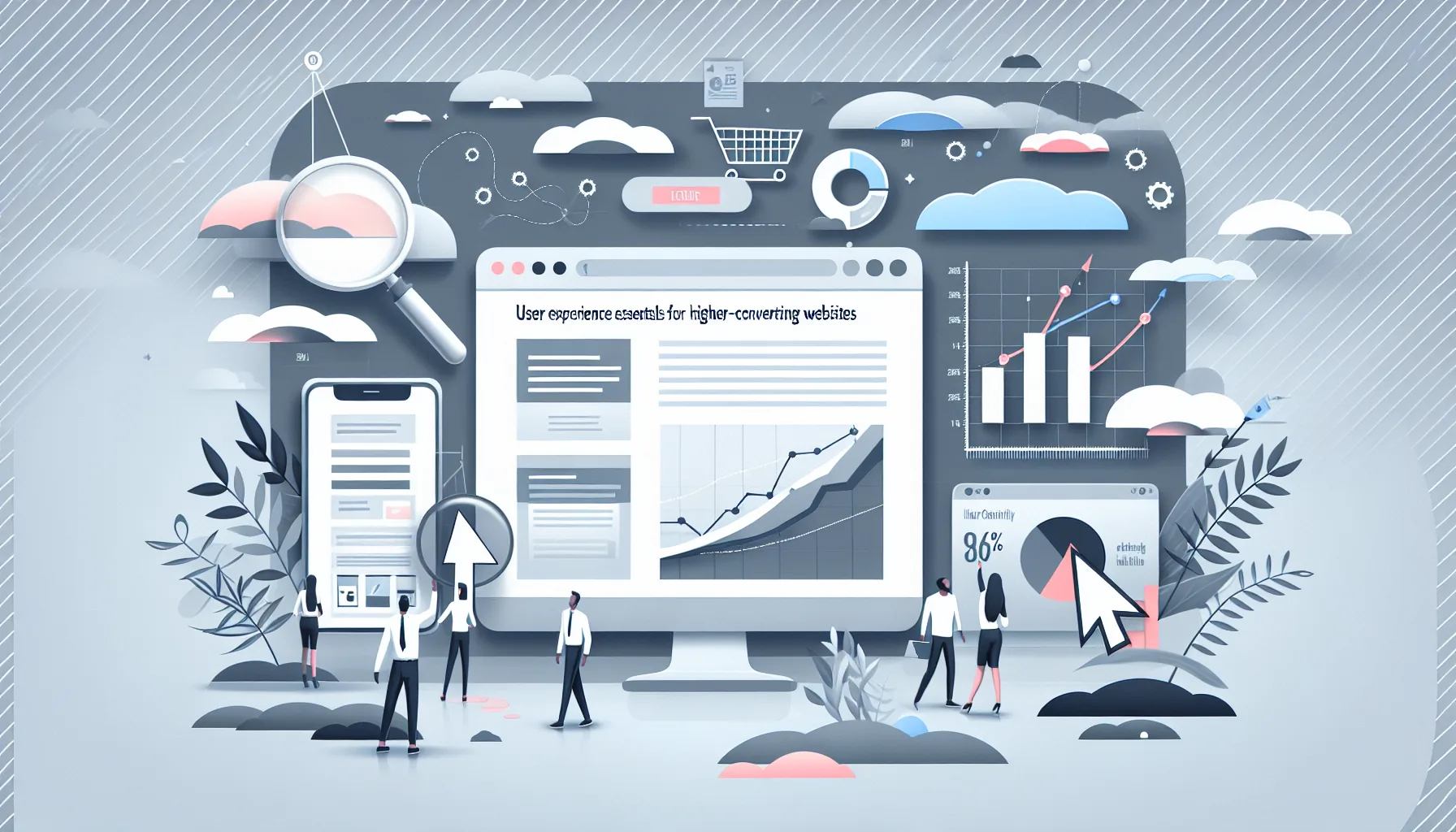
User Experience Essentials for Higher-Converting Websites
In a crowded digital marketplace, design alone won’t turn visitors into customers. The differentiator is user experience, a disciplined practice that aligns business goals with what real people need, expect, and feel while using your site. When UX is intentional, you reduce friction, build trust, and guide every click toward a measurable outcome. This article breaks down the essential elements of high-converting websites, with practical steps you can apply today and a framework for continuous improvement.
What Is User Experience?
User experience (UX) is the quality of a person’s interaction with your website across speed, structure, content, visual design, and support. Great UX is cross-disciplinary: strategy, design, development, and content teams collaborate to remove barriers and motivate action. For conversion-focused sites, the mandate is simple—make it easy for the right visitor to accomplish the right task, at the right moment, on any device.
Essentials That Drive Conversions
Fast, Frictionless Performance
Speed is a growth multiplier. Every extra second of load time increases bounce risk and erodes trust. Optimize images, defer non-essential scripts, minify assets, and use a content delivery network. Monitor Core Web Vitals to identify issues that impact interactivity and stability. Faster pages improve user experience and search visibility.
Mobile-First, Responsive Layouts
Most visitors will meet your brand on a phone. Design from the smallest viewport up, prioritize thumb-friendly controls, and test across real devices. Avoid intrusive interstitials, ensure tap targets are large enough, and keep typography legible. Responsive images and CSS container queries help deliver crisp, efficient layouts that maintain a consistent user experience.
Accessibility Is Non‑Negotiable
Accessibility expands your market and reduces legal risk. Follow WCAG guidelines for color contrast, keyboard navigation, semantic HTML, and descriptive alt text. Provide ARIA labels where needed and never rely on color alone to convey meaning. Inclusive design improves usability for everyone and strengthens user experience.
Clear Messaging and Visual Hierarchy
Clarity converts. Lead with a value proposition that matches visitor intent, reinforce it with concise copy, and highlight your primary call to action. Use headings, white space, and contrast to guide scanning. Pair photography and iconography with purposeful microcopy. When words matter most, invest in conversion-focused copywriting to align tone, structure, and SEO.
Trust Signals and Social Proof
People buy from brands they trust. Display reviews, testimonials, case studies, security badges, and guarantees near key decisions. Show real names, photos, and measurable outcomes wherever possible. Use third-party validation and transparent policies to reduce uncertainty. Clear contact information and an About page humanize your business and improve user experience.
Streamlined Forms and Checkout
Every field adds friction. Ask only for data you truly need, support autofill, and provide inline validation. Break complex flows into concise steps with a clear progress indicator. Offer guest checkout, multiple payment options, and clear error recovery. When forms are fast and forgiving, conversion rates climb and user experience benefits.
Micro-Interactions That Elevate User Experience
Delight reinforces momentum. Small cues—button states, hover effects, subtle motion, and confirmatory messages—help users feel in control. Keep animations under 200–300 ms, respect reduced-motion settings, and make feedback meaningful rather than flashy. Thoughtful details reduce cognitive load and make your site feel polished without distracting from the primary goals.
Measure and Optimize User Experience
High-performing teams treat UX as an ongoing process. Define success metrics tied to business outcomes—task completion, lead quality, revenue per visit, and retention—then instrument analytics to observe behavior. Use heatmaps and session replays to spot friction. Run A/B tests on headlines, layouts, and forms to validate changes. Pair quantitative data with qualitative insights from user interviews and usability testing. The Nielsen Norman Group’s usability heuristics offer a timeless checklist for catching common pitfalls during reviews.
How STL Website Development Brings It Together
We align strategy, design, and engineering to remove friction across the entire funnel. Our discovery process clarifies audiences, jobs-to-be-done, and success metrics. From there, we deliver custom website development with modular components, accessible patterns, and performance budgets. We pair visual identity with professional logo design, and we craft conversion-focused copy that moves prospects to act. After launch, our website maintenance plans keep your platform secure, updated, and fast—so improvements compound over time.
Practical Checklist for Immediate Wins
- Audit Core Web Vitals and fix slow scripts, large images, and layout shifts.
- Clarify your value proposition in the first screen and tighten primary CTAs.
- Reduce form fields, support autofill, and add real-time validation.
- Simplify navigation labels and limit top-level menu items.
- Add testimonials, case studies, and trust badges near key CTAs.
- Verify color contrast, focus indicators, and alt text for accessibility.
- Implement image compression, caching, a CDN, and HTTP/2.
- Set up analytics goals and event tracking to measure user experience and outcomes.
FAQs
What is user experience, and why does it matter?
It’s the total quality of a visitor’s interaction with your site—speed, clarity, accessibility, trust, and support. Strong UX reduces friction and uncertainty, helping more people complete the tasks that drive your business.
How fast should my site load?
Aim for under two seconds for primary templates and keep interaction delays below 100 ms. Optimize images, fonts, and JavaScript, and monitor Core Web Vitals continuously.
Do I need a full redesign to improve conversions?
Not always. Start with high-impact optimizations—message clarity, performance, form simplification, and trust signals—then test. A phased approach compounds wins while limiting risk and cost.
How do you decide what to test first?
We prioritize by potential impact, confidence, and effort. Analytics, heatmaps, and user feedback reveal friction points; we start with the smallest changes likely to influence critical conversions.
Ready to Improve Your Site’s Results?
High-converting websites aren’t accidents. They’re the result of a rigorous UX process, tight collaboration, and continuous optimization. If you’re comparing partners, look for the best web agency for your goals—one that leads with research, measures what matters, and ships improvements with discipline. STL Website Development builds fast, accessible, and conversion-focused sites that turn traffic into revenue. Let’s map your next win—contact us to start a conversation. Explore our website development process to see how we partner for growth.