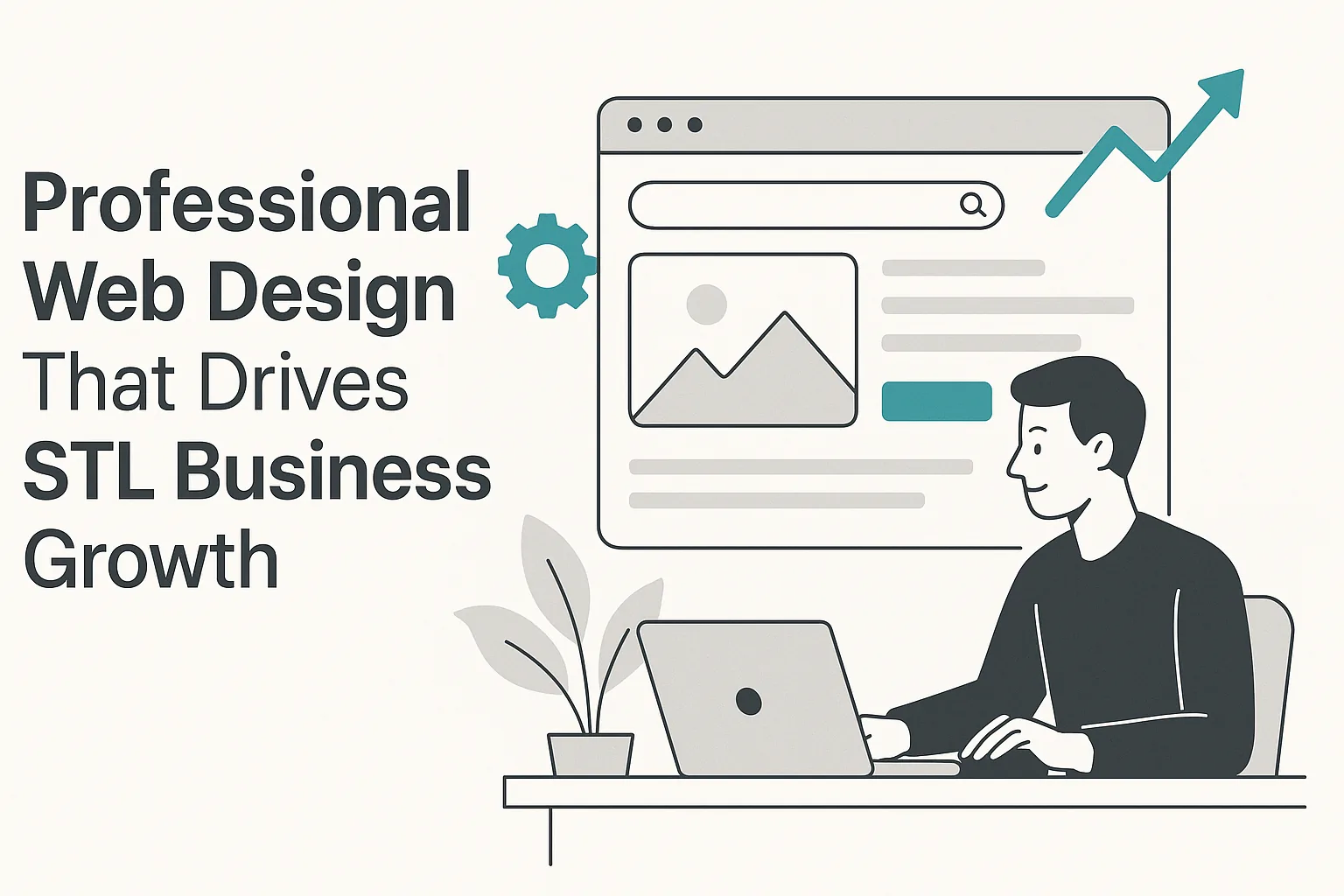
Professional Web Design That Drives STL Business Growth
In a competitive local market, professional web design is not just about having a modern-looking website. It is about building a digital sales asset that helps St. Louis businesses attract the right visitors, communicate value quickly, generate leads, and support long-term growth. Whether you serve customers across the metro area or sell nationally from an STL-based operation, your website often shapes the first impression of your business.
A well-designed website should work as hard as your sales team. It should load quickly, guide visitors clearly, support search visibility, and make it easy for customers to take the next step.
Why Professional Web Design Matters for STL Businesses
St. Louis businesses compete in a market where customers research before they call, visit, or buy. From contractors and medical practices to manufacturers, restaurants, consultants, and professional service firms, your website can either build trust or create doubt.
Strong professional web design helps your business:
- Establish credibility with new visitors
- Explain services clearly and quickly
- Improve local search performance
- Increase calls, quote requests, bookings, and form submissions
- Support branding across all digital channels
- Create a better experience for mobile users
- Reduce friction in the buying process
A website is often the center of your marketing ecosystem. Paid ads, social media campaigns, email marketing, referrals, Google Business Profile traffic, and organic search all lead people back to your site. If the site does not convert, the rest of your marketing becomes less effective.
Professional design brings together strategy, visual presentation, user experience, content, performance, and technical structure. It is not one thing. It is the combination of many details working together.
What Separates Professional Web Design From a Basic Website
A basic website may show your logo, list your services, and include a contact page. That is not enough if you want measurable business growth.
Professional web design focuses on business outcomes. It considers who your customers are, what they need, how they evaluate providers, and what information they need before taking action.
Strategic Structure
A growth-focused website begins with a clear structure. Pages should be organized around how customers search and make decisions.
For example, a service business may need:
- A strong homepage
- Individual service pages
- Location-focused pages
- Case studies or project examples
- About and trust-building content
- FAQs
- Contact and quote request pages
This structure helps visitors find relevant information and helps search engines understand what your business offers. Google’s own Search Central documentation emphasizes the importance of helpful, crawlable, user-focused content.
Clear Messaging
A visually attractive website will not perform if the message is unclear. Visitors should quickly understand:
- What you do
- Who you serve
- Why you are different
- What action they should take next
Clear messaging removes uncertainty. It also helps your team communicate consistently across sales, marketing, and customer service.
If your website copy needs improvement, investing in professional website copywriting services can help turn vague messaging into clear, conversion-focused content.
Conversion-Focused Design
Every key page should have a goal. That goal may be to generate a phone call, schedule a consultation, request a quote, book a service, download a resource, or visit a physical location.
Conversion-focused professional web design uses elements such as:
- Strong calls to action
- Clean navigation
- Trust signals
- Testimonials
- Simple forms
- Prominent contact options
- Service-specific page layouts
- Clear visual hierarchy
The goal is to make the next step obvious without overwhelming the visitor.
Professional Web Design and Local STL Growth
Local businesses need websites that support how people search in the St. Louis region. A potential customer may search for a service “near me,” compare several companies, read reviews, and visit multiple websites before making contact.
Your website should help you stand out during that evaluation process.
Building Local Trust
People want to know they are dealing with a real, capable, local business. Your website can build that trust by including:
- Local project examples
- STL-area service details
- Team photos
- Customer testimonials
- Business history
- Certifications or associations
- Clear contact information
- Maps or service area information
Generic websites often fail because they do not feel connected to the community they serve. A local business website should reflect real local credibility.
Supporting Local SEO
Professional design and SEO are closely connected. Search engines evaluate more than keywords. They also consider site structure, page experience, mobile usability, internal linking, and content quality.
A well-designed website should include:
- Fast-loading pages
- Mobile-friendly layouts
- Clean URL structures
- Optimized title tags and headings
- Proper image optimization
- Schema markup when appropriate
- Logical internal linking
- Helpful service content
According to Google’s guidance on page experience, user experience factors can play an important role in how people interact with your site. If users land on a slow, confusing, or outdated website, they are more likely to leave.
Turning Local Traffic Into Leads
Traffic alone does not create growth. The website must convert local visitors into real business opportunities.
That means your contact information should be easy to find. Forms should be short and functional. Service pages should answer common questions. CTAs should match user intent. A visitor who is ready to call should not have to search for your phone number. A visitor comparing providers should find proof that your company can deliver.
This is where professional web design creates a direct business impact.
Key Elements of Professional Web Design
A website that supports growth is built from several important components. Each one affects how visitors experience your brand and whether they choose to contact you.
Mobile-First Layouts
Most users will interact with your website on a phone at some point. Mobile design is not optional.
A mobile-first website should include:
- Easy-to-read text
- Tap-friendly buttons
- Simple menus
- Fast page speed
- Clear calls to action
- Forms that work well on small screens
- Proper spacing between elements
If your site looks acceptable on desktop but feels frustrating on mobile, you are likely losing leads.
Fast Performance
Speed affects user experience and conversion rates. Visitors do not want to wait for oversized images, bloated scripts, or poorly configured pages to load.
Professional web design should include performance best practices such as:
- Compressed images
- Clean code
- Efficient hosting
- Caching
- Limited unnecessary plugins
- Optimized scripts
- Lightweight design systems
Performance is especially important for mobile users, who may be browsing on slower connections.
Strong Visual Branding
Your website should look like your business, not like a generic template. Colors, typography, imagery, spacing, icons, and layout choices all influence brand perception.
This also includes your logo. A weak or outdated logo can make an otherwise solid website feel less credible. If your visual identity needs improvement, STL Website Development offers custom logo design for stronger brand recognition.
Effective logo design should be simple, recognizable, scalable, and appropriate for your industry. It should also work across your website, signage, business cards, social profiles, and digital ads.
User Experience
User experience, often called UX, is about making the site easy and intuitive to use. It includes navigation, content flow, visual hierarchy, accessibility, and interaction design.
The Nielsen Norman Group defines user experience as encompassing all aspects of the end user’s interaction with a company, its services, and its products. For websites, that means every click, page, form, and design decision matters.
Good UX answers questions before frustration sets in:
- Where am I?
- What does this company do?
- Can they help me?
- Why should I trust them?
- What should I do next?
When users can answer those questions quickly, they are more likely to convert.
Accessibility
Accessibility ensures more people can use your website, including users with disabilities. It is also part of building a more usable, responsible digital presence.
Accessible design may include:
- Proper heading structure
- Sufficient color contrast
- Alt text for meaningful images
- Keyboard-friendly navigation
- Descriptive link text
- Clear form labels
- Readable font sizes
The Web Content Accessibility Guidelines provide widely recognized standards for accessible web experiences. Accessibility is not just a technical concern. It improves usability for everyone.
How Professional Web Design Improves Lead Generation
A lead-generating website is designed around user intent. Different visitors arrive with different levels of urgency. Some are ready to buy. Others are researching. Your site should support both.
Service Pages That Sell
Service pages are some of the most important pages on your website. They should do more than list what you offer.
An effective service page should include:
- A clear explanation of the service
- Who the service is for
- Common problems it solves
- Your process
- Benefits of working with your company
- Proof, such as testimonials or examples
- FAQs
- A clear call to action
If you offer multiple services, each major service should generally have its own page. This improves clarity for users and gives search engines more specific content to understand.
For businesses ready to improve their site structure and functionality, STL Website Development provides custom website development services built around performance, usability, and business goals.
Calls to Action That Match the Customer Journey
Not every visitor is ready for the same action. Your website may need several types of CTAs, such as:
- Call now
- Request a quote
- Schedule a consultation
- View our work
- Learn more about a service
- Download a guide
- Ask a question
The placement and wording of CTAs should match the page content. A homepage may use a broad CTA. A service page may use a more specific CTA. A blog article may guide users toward a related service.
Trust Signals That Reduce Risk
Customers want reassurance before they contact a business. Trust signals help reduce perceived risk.
Useful trust signals include:
- Reviews and testimonials
- Industry certifications
- Years in business
- Case studies
- Client logos
- Before-and-after examples
- Awards
- Security indicators
- Clear policies
These elements should be placed where they support decision-making, not hidden on one page.
Professional Web Design for Better Content and SEO
Content and design should work together. If the content is strong but the layout is difficult to read, users will leave. If the design is polished but the content is thin, search performance and conversions will suffer.
H3: Professional Web Design Makes Content Easier to Use
A key benefit of professional web design is that it makes content easier to scan, understand, and act on. Most users do not read every word of a page from top to bottom. They scan headings, bullets, images, buttons, and highlighted sections.
Design can improve content performance through:
- Clear headings
- Short paragraphs
- Bulleted lists
- Pull quotes
- Visual section breaks
- Comparison tables
- Icons
- Strong page introductions
- Contextual calls to action
The goal is not to decorate content. The goal is to make information easier to consume.
Better Internal Linking
Internal links help users move through your website and help search engines understand relationships between pages. A strong internal linking strategy connects blog posts, service pages, location pages, and supporting resources.
For example, a blog post about website performance may link to website development services. A brand strategy article may link to logo design. A site security article may link to maintenance.
Internal linking should always feel natural and useful. Descriptive anchor text is better than vague phrases like “click here.”
Fresh Content and Ongoing Improvements
Your website should not be treated as a one-time project. Technology changes, competitors update their sites, search behavior evolves, and your business may add new services or change priorities.
Ongoing updates can include:
- Publishing new content
- Improving older pages
- Updating plugins and software
- Fixing broken links
- Monitoring performance
- Enhancing security
- Adding new case studies
- Testing calls to action
For companies that need reliable support after launch, ongoing website maintenance helps keep a site secure, updated, and performing properly.
Common Web Design Mistakes That Hold Businesses Back
Many business websites underperform because of avoidable design and strategy problems.
Outdated Design
An outdated site can make a business appear less capable, even if the company provides excellent service. Design trends change, but more importantly, user expectations change. Visitors expect clean layouts, fast loading, mobile usability, and clear navigation.
Weak Calls to Action
If users do not know what to do next, they may leave. Every important page should guide visitors toward a logical action.
Poor Mobile Experience
A desktop-only mindset is a major problem. Mobile users need simple navigation, readable content, and fast access to contact options.
Slow Load Times
Slow websites lose visitors. Large images, poor hosting, excessive plugins, and outdated code can all damage performance.
Thin or Generic Content
Generic content does not differentiate your business. It also makes it harder to rank for meaningful searches. Your website should explain your services, answer real customer questions, and demonstrate your expertise.
Confusing Navigation
Navigation should be simple and predictable. Users should not need to guess where to find important information.
Inconsistent Branding
Inconsistent colors, fonts, imagery, and messaging can weaken trust. Your website should present a unified brand experience.
When Should an STL Business Redesign Its Website?
Not every website needs to be replaced immediately, but there are clear signs that a redesign may be the right move.
You may need a redesign if:
- Your site looks outdated compared to competitors
- It does not work well on mobile devices
- Leads from the website are low or declining
- Pages load slowly
- Your services have changed
- Your branding has changed
- The site is difficult to update
- Your search visibility is poor
- Visitors are not taking action
- The site lacks clear service pages
- You are investing in marketing but not seeing conversions
A redesign should not be based only on appearance. It should be based on business goals, analytics, user behavior, and growth opportunities.
How STL Website Development Approaches Professional Web Design
STL Website Development builds websites with strategy, usability, and long-term value in mind. The goal is not to create a site that simply looks good on launch day. The goal is to build a website that supports your business over time.
A strong process may include:
Discovery and planning
Understanding your business, audience, competitors, services, and goals.Site structure and strategy
Planning pages, navigation, content hierarchy, and conversion paths.Design direction
Creating a visual approach that reflects your brand and supports usability.Content development
Writing or refining copy so visitors understand your value quickly.Development
Building a responsive, performance-focused website.Testing
Reviewing mobile layouts, forms, links, speed, browser compatibility, and usability.Launch and support
Deploying the site and providing ongoing support as needed.
This approach ensures that professional web design is connected to real business goals, not just surface-level aesthetics.
FAQ
What is professional web design?
Professional web design is the strategic planning, visual design, content organization, and technical development of a website built to support business goals. It includes branding, usability, mobile responsiveness, performance, accessibility, SEO structure, and conversion-focused page layouts.
How does professional web design help generate more leads?
It improves the user experience, makes your services easier to understand, builds trust, and guides visitors toward clear actions such as calling, requesting a quote, or scheduling a consultation. Better design reduces friction and helps turn website traffic into real opportunities.
How often should a business redesign its website?
Many businesses should evaluate their website every two to three years, but timing depends on performance. If your site is slow, outdated, hard to update, not mobile-friendly, or not generating leads, it may be time to redesign sooner.
Does logo design matter for website performance?
Yes. Logo design affects brand recognition and credibility. A professional logo helps your website feel more trustworthy and consistent, especially when paired with strong messaging, clean layouts, and a cohesive visual identity.
Can professional web design improve SEO?
Yes. While design alone is not SEO, it supports SEO through mobile usability, site speed, clean structure, internal linking, readable content, and improved user engagement. A well-built site gives your content a stronger foundation for search performance.
Build a Website That Supports Real Business Growth
Your website should do more than exist. It should help your business earn trust, explain your value, attract qualified visitors, and convert those visitors into customers. For STL businesses, professional web design is a practical investment in visibility, credibility, and growth.
If your current website is outdated, difficult to use, slow, or failing to generate leads, it may be time for a more strategic approach.
Contact STL Website Development today to discuss a website built for performance, usability, and measurable business growth.